Behavior Modificaton in Horses is a long topic from training, to hormones to pain reactions.
Please read Part 1 in this series at: http://equitage.com/Behavior-Modification.html
Horses have been ridden by humans for centuries. Over time they have become domesticated and people have learned many useful training techniques to create riding companions and sport horses. As horse people we all enjoy the unique relationship we have with our horses and the elegant teamwork in an event after hours of practice and training. Occasionally we find that our horse may change their behavior suddenly and be reticent to the previous training protocol or irritable and non-responsive to aids during a competition. So, where do we begin? Is this a training issue, a behavior issue or a pain issue? If this is a sudden change in behavior in a horse who has been previously well trained and cooperative, a full evaluation of the horse’s health and environment is helpful.
Some of the common areas to evaluate when we see a change in behavior are:
1. Hormonal Part 1
2. Environmental (change in location or neighbors)
3. Musculoskeletal Pain (arthritis)
4. Internal pain (colic, ulcers)
5. Mental?
Since this is an extensive list I am going to talk about the first factor today and continue on in another post to follow.
Hormonal behavioral changesThe most common hormonal behavioral change we hear about is with mares that come into “season”. Mares cycle about every 21 days. On average they are “in” their estrus for 5 days and then calmer and “out” for 16 days. Of course this timing can vary. Some of the common behaviors in strongly affected mares include: irritability, kicking at other horses, swishing the tail, squatting, “winking” and urinating frequently, squealing when male horses are around, a non-cooperative attitude and unwillingness to move forward. I have seen extreme cases where mares actually seem painful during ovulation and may lean on fences, damage horse trailers or have colic symptoms. Less obvious symptoms may just be a decreased sensitivity to aids, unwillingness to move forward and/or general malaise. Other symptoms of course are possible and any change in behavior that seems to follow the 5/16 day rule is probably related to estrus.
Treatments for mare estrus behavior changes
1. Hormonal treatments
a. Oral Altrenogest (Regumate). This is an oral progestin that is administered daily. Some mares do very well on this product and it is the only hormone treatment that has been experimentally proven to decrease cycling and ovulation in the mare. The down side to this product is that it needs to be given every day during the time period you want to suppress estrus. Also the oral liquid can be challenging to give and tends to easily drip on the person administering the product. Gloves should be worn and hands washed to prevent absorption through the skin.
b. MedroxyProgesterone injection:
This product in injected every 3-4 weeks and basically suppresses the behavior during one estrus cycle. The advantage is that it is only one injection every 3-4 weeks. The down side is that it has not been proven to suppress ovulation and it doesn’t work in about 20% of mares. If given by the owner the cost is reduced from Regumate
c. Repository Progesterone Implant (Synovex):
This is an implant that is surgically placed under the skin of the mare about every 3 months. This works very well for about 80% of the mares it is tried on. Advantages are that it is only once every 3 months, can be planned ahead for the show season and is the cheapest cost per day of the hormones. Disadvantages are that the beads do not always dissolve and sometimes can be seen and felt. Swelling can occur at the site of injection.
2. Natural Treatments
a. Herbs and vitamins:
There are many natural products on the market for oral supplementation. Raspberry leaves have been used for centuries to decrease estrus symptoms. Other supplements may concentrate on calming the horse with B vitamins, Magnesium and Tryptophan. As with all medications and herbs the affect can vary widely with the individual horse, but I believe they are worth trying.
b. Acupuncture :
Horses have been treated with acupuncture for over 3000 years. Many behavioral issues including hormonal imbalance can successfully be treated with acupuncture. Preferably at least three treatments are performed and usually we can keep the mare balanced for the year. This is definitely worthwhile for any mare and especially those who have not responded well to hormone therapy or the owner would like to try a more natural approach
Other hormonal behavior changes
1. Aggressive stallion like behavior in a mare:
If a mare tends to exhibit more and more aggressive stallion like behavior there may be a problem. There is a tumor of the ovaries that is called a granulose cell tumor. Usually that ovary is much enlarged and tends to secrete extra testosterone, hence the stallion like behavior. Diagnosis of the condition includes palpation of the ovaries, ultrasonography of the reproductive tract and a blood hormone profile. If the hormones follow a specific pattern it is usually easy to diagnose a granulose cell tumor. These are treated by surgical removal of the affected ovary. This procedure can be done standing with few complications.
2. Hormonal behavioral changes in a gelding
So your gelding is acting a lot more like a stallion. more energy and aggressive behavior. It is usually a good idea to do a hormone profile. On rare occasions the horse can actually be a cryptorchid which is a male horse is an undescended testicle. These horses tend to be exceptionally aggressive and should be diagnosed and treated post haste. The treatment is to remove the retained testicle. Sometimes this can be found to the exterior of the abdominal wall which would be a simple procedure. If the testicle cannot be found, it is most likely in the abdomen which must be opened up to find and remove the testicle.
3. Unusual behavior in senior horses (Cushing’s Disease)
As our horses age they can develop many new conditions that may affect their behavior. They can have kidney or liver dysfunction which will be covered more in the internal organ section. They can also develop Cushing’s disease which is better known for other symptoms such as laminitis. However this is a tumor in the pituitary. Depending upon all the chemicals it stimulates the body to secrete and the space occupying area in the brain, there can be behavioral changes with this disease. Some of the symptoms I have observed include falling asleep while standing, unsteady with the Farrier, anxiousness and a general picky appetite. This can be easily diagnosed with a blood test and is treated with a once daily dose of Pergolide.
Continued in Part 2
Friday, January 13, 2012


Friday, August 21, 2009
Time for a new post....West Nile Virus
OK, I know I'm waaaaaay overdue for a post on this blog. Time just flies by!
Well I did want to inform you that there has been the first West Nile Virus equine death in California for 2009. The horse lived in Tracy, California. The last few years we have mainly been seeing equine cases in August and September. It is a reminder to all of us to make sure our horses are up to date on their West Nile vaccinations. We have a great newer vaccine that is based on DNA technology. It has a very low incidence of reactions and it is only needed once a year. Due to the timing of this virus in the mosquito population and therefore risk to horses, I recommend vaccinating around May to early July. Call us if you are not certain of when your horse was last vaccinated. 760-634-2144
"West Nile Virus Claims First Equine Death of 2009 in California
California has recorded its first horse death for 2009 due to West Nile Virus (WNV). The horse death was reported near Tracy, in San Joaquin County, on August 6.
Typically, the majority of horse deaths from WNV occur in August and September. In 2008, 64 animal deaths from WNV were reported by veterinarians in California. All California counties are at risk for WNV, and nearly every county has identified a positive equine, human, avian or mosquito case in 2009.
As the best-qualified experts, veterinarians should educate horse owners about WNV and the steps that can be taken to prevent it, including encouraging owners to vaccinate their horses against WNV." From the CVMA newsletter.
Well I did want to inform you that there has been the first West Nile Virus equine death in California for 2009. The horse lived in Tracy, California. The last few years we have mainly been seeing equine cases in August and September. It is a reminder to all of us to make sure our horses are up to date on their West Nile vaccinations. We have a great newer vaccine that is based on DNA technology. It has a very low incidence of reactions and it is only needed once a year. Due to the timing of this virus in the mosquito population and therefore risk to horses, I recommend vaccinating around May to early July. Call us if you are not certain of when your horse was last vaccinated. 760-634-2144
"West Nile Virus Claims First Equine Death of 2009 in California
California has recorded its first horse death for 2009 due to West Nile Virus (WNV). The horse death was reported near Tracy, in San Joaquin County, on August 6.
Typically, the majority of horse deaths from WNV occur in August and September. In 2008, 64 animal deaths from WNV were reported by veterinarians in California. All California counties are at risk for WNV, and nearly every county has identified a positive equine, human, avian or mosquito case in 2009.
As the best-qualified experts, veterinarians should educate horse owners about WNV and the steps that can be taken to prevent it, including encouraging owners to vaccinate their horses against WNV." From the CVMA newsletter.
Thursday, January 10, 2008
Community Lectures at the Helen Woodward Animal Center
Announcing Community Lectures at the Helen Woodward Animal Center!!
I'm excited to announce this winter and spring I'll be providing three lectures at the Helen Woodward Animal Center. We'll have some refreshments available and they should be fun, casual evenings. Feel free to invite your friends.
Tues Feb 12: Advanced Veterinary Equine Dental Solutions: What ills are lurking in your horse's mouth?
Tues March 11: Performance Horse Medicine: How Regenerative Cell Therapy can improve Sport horse injuries and get you back in the saddle faster.
Tues May 13: Acupuncture: Where East meets West and how Acupuncture can improve musculoskeletal problems and resolve difficult to treat cases.
All lectures will start at 6:00pm in Morris Hall.
Please RSVP to 858-759-5144 or to: office@drlisagrim.com
I'm excited to announce this winter and spring I'll be providing three lectures at the Helen Woodward Animal Center. We'll have some refreshments available and they should be fun, casual evenings. Feel free to invite your friends.
Tues Feb 12: Advanced Veterinary Equine Dental Solutions: What ills are lurking in your horse's mouth?
Tues March 11: Performance Horse Medicine: How Regenerative Cell Therapy can improve Sport horse injuries and get you back in the saddle faster.
Tues May 13: Acupuncture: Where East meets West and how Acupuncture can improve musculoskeletal problems and resolve difficult to treat cases.
All lectures will start at 6:00pm in Morris Hall.
Please RSVP to 858-759-5144 or to: office@drlisagrim.com
Wednesday, December 12, 2007
Happy Holidays...planning for the New Year

Happy Holidays everyone,
Wow, a very crazy end to this year! First the fires then a lot of rain. I know that the rain wreaked some unexpected havoc on many local ranches and impacted the recent Greater San Diego Hunter Jumper year end Championship show. But, with a little humor and a lot of perseverance everyone seemed to have gotten through safe and sound and very ready to celebrate with family and friends during the holidays. I even managed to fit in our year end Equine Veterinary annual conference in Orlando, Florida. Here's a funny little video I came across to maybe get everyone in the Holiday Spirit. http://www.youtube.com/view_play_list?p=C8DB9A442F6B5F24
I know that one is supposed to update their blogs every week or so but I've had a little writers block. As much as I like to talk you wouldn't think that would be a problem! What I thought would be a good idea to focus on as we approach the new year is equine Insurance. It may sound boring, but I have found that it is an important consideration if you own a horse. Many of my clients have found insurance to be very beneficial when a complicated medical condition, lameness, injury or colic situation occurs. Insurance has allowed us to delve deeper into complicated lameness issues using more sophisticated diagnostics such as nuclear scintigraphy and cutting edge therapeutics such as stem cell therapy. Also, imagine if your horse suddenly has colic that needs surgical intervention. This can cost easily from $5.000-$7,000 as a minimum. Insurance can give you assurance that if a critical injury arises for your horse that you will not incur a huge financial burden to help cure your animal. I do not work for any insurance companies I have just seen the difference it has made in cases I have worked on. No one likes to make life or death decisions for their pets based solely on finances. Insurance may be a way to mitigate the impact of these unexpected situations. So, perhaps after the holidays wind down and as you're are making plans for next year, you may consider investigating equine insurance. I know there are a handful of companies that advertise in the Southern California Horseman's Directory.
On a lighter note, I wish you all a wonderful, peaceful, fun Holiday Season. I have many memories to reflect upon with you my clients from this last year. Who knew at the beginning of the year I was going to pull a horse out of a ditch with a local fire department, save a foal being born who was in the wrong position, use brand new regenerative cell technology to repair sports injuries and work with one of the Olympic team vets this year! You never know what's ahead. Here's to an even more exciting and rewarding New Year! Lisa
Wow, a very crazy end to this year! First the fires then a lot of rain. I know that the rain wreaked some unexpected havoc on many local ranches and impacted the recent Greater San Diego Hunter Jumper year end Championship show. But, with a little humor and a lot of perseverance everyone seemed to have gotten through safe and sound and very ready to celebrate with family and friends during the holidays. I even managed to fit in our year end Equine Veterinary annual conference in Orlando, Florida. Here's a funny little video I came across to maybe get everyone in the Holiday Spirit. http://www.youtube.com/view_play_list?p=C8DB9A442F6B5F24
I know that one is supposed to update their blogs every week or so but I've had a little writers block. As much as I like to talk you wouldn't think that would be a problem! What I thought would be a good idea to focus on as we approach the new year is equine Insurance. It may sound boring, but I have found that it is an important consideration if you own a horse. Many of my clients have found insurance to be very beneficial when a complicated medical condition, lameness, injury or colic situation occurs. Insurance has allowed us to delve deeper into complicated lameness issues using more sophisticated diagnostics such as nuclear scintigraphy and cutting edge therapeutics such as stem cell therapy. Also, imagine if your horse suddenly has colic that needs surgical intervention. This can cost easily from $5.000-$7,000 as a minimum. Insurance can give you assurance that if a critical injury arises for your horse that you will not incur a huge financial burden to help cure your animal. I do not work for any insurance companies I have just seen the difference it has made in cases I have worked on. No one likes to make life or death decisions for their pets based solely on finances. Insurance may be a way to mitigate the impact of these unexpected situations. So, perhaps after the holidays wind down and as you're are making plans for next year, you may consider investigating equine insurance. I know there are a handful of companies that advertise in the Southern California Horseman's Directory.
On a lighter note, I wish you all a wonderful, peaceful, fun Holiday Season. I have many memories to reflect upon with you my clients from this last year. Who knew at the beginning of the year I was going to pull a horse out of a ditch with a local fire department, save a foal being born who was in the wrong position, use brand new regenerative cell technology to repair sports injuries and work with one of the Olympic team vets this year! You never know what's ahead. Here's to an even more exciting and rewarding New Year! Lisa
Monday, October 29, 2007
San Diego Wildfires 2007
http://www.drlisagrim.com/
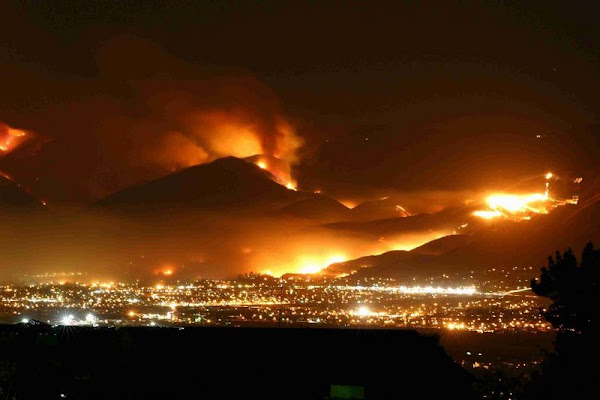
This “firestorm” has affected almost everyone I know and everyone who owns a horse. I personally was involved in helping evacuate horses and helped horses at the evacuation centers who had health problems. So far I know of two clients of mine who have lost their homes and my heart goes out to them. Fortunately, their horses are safe. So far I have not heard of any of my patients suffering major injuries from the fires or the evacuation process, Thank Goodness! As always horse owners come together and selflessly help each other. I felt that this year the evacuations actually went smoother and with less injuries than the 2003 fires. I think this was due to more advanced notice, people willing to evacuate sooner and perhaps a little experience. I know we want to get on with our normal lives and not dwell too much on this stressful event, but it is always good to take a few moments after a disaster and evaluate. How prepared were you? What could we have done better? Obviously I haven’t heard all the stories yet, but I would welcome all of your input. Send me your stories, pictures, where did you evacuate to? What do you think you could have done better? How could someone else or an organization possibly help out? Any tips or tidbits are welcome. I’ll follow here with a general disaster preparedness plan and will send you other ideas as they come in.
Are you prepared?
When disasters occur and we face evacuating and caring for our horses, it takes a little more effort and planning. Obviously the biggest concern in our area is the need to evacuate in the case of a large wild fire. However, being prepared helps even if your horse is ill and needs to be moved to an equine hospital.
Emergency kit
Consider having an easy to access emergency kit. Remember in an emergency everyone tends to get anxious and you want things handy. You may choose to have general first aid items here including antiseptic soap and ointment and some bandage material, but also consider having your horse's normal daily medication here if they are on a prescription. Bandage scissors, a working flashlight, and emergency phone numbers are helpful. This includes my number, your trainer or neighbor, a trailering service if you don’t own a trailer, fire dept., sheriff’s dept., animal control/rescue, and a list of potential evacuation sites.
Trailering Options
One of the biggest issues in this large equine evacuation event was the lack of horse trailers. Some people were able to get some of their horses out, but on return were not allowed back in to get the remainder of their animals.
Do you have a trailer? How many horses do you have and will they all fit in your trailer(s)? If the answer is no to these you might spend some time researching alternatives in your area. I already know that several of my clients have plans to buy a trailer next week, but in some circumstances it does not make sense to have a horse trailer sitting around for each horse (i.e. large stables) But, have a plan, even if your horse needs to go to the hospital in the middle of the night. There are several transportation companies in the Southern California Horsemen’s Directory. Also there are many friends and neighbors that are willing to help out in an emergency. Have more than one option and the phone numbers handy. I will be working with the county Disaster preparedness chief veterinarian about the possibility of collecting names and numbers of people at evacuation sites willing to come out and help with evacuations once their stock is safe.
And…..if you are ever in this situation again and are having a hard time getting a hold of someone, please give me a call, I will do my best to help you out.
I am so glad to know that everyone for the most part now is safe and sound. I know a lot of us are mentally regrouping, but I see people starting to ride this week and the partnership we have with these equine companions of ours always helps us to feel grounded. Unfortunately some of our friends in Ramona have not faired so well. There were a lot more homes and barns lost in this area. If you have any interest there is a group working on bringing in donated hay to those who lost their entire Winter supply of hay....you can donate at this website http://www.hswhs.org/.
If you know of any other needs in our equine community please write. And please share here your stories, insights and even humor through this whole week. Also, you can access my website directly at http://www.drlisagrim.com/.
Thanks and God Bless,
Lisa
Lisa Grim, DVM, Inc.
858-759-5144
This “firestorm” has affected almost everyone I know and everyone who owns a horse. I personally was involved in helping evacuate horses and helped horses at the evacuation centers who had health problems. So far I know of two clients of mine who have lost their homes and my heart goes out to them. Fortunately, their horses are safe. So far I have not heard of any of my patients suffering major injuries from the fires or the evacuation process, Thank Goodness! As always horse owners come together and selflessly help each other. I felt that this year the evacuations actually went smoother and with less injuries than the 2003 fires. I think this was due to more advanced notice, people willing to evacuate sooner and perhaps a little experience. I know we want to get on with our normal lives and not dwell too much on this stressful event, but it is always good to take a few moments after a disaster and evaluate. How prepared were you? What could we have done better? Obviously I haven’t heard all the stories yet, but I would welcome all of your input. Send me your stories, pictures, where did you evacuate to? What do you think you could have done better? How could someone else or an organization possibly help out? Any tips or tidbits are welcome. I’ll follow here with a general disaster preparedness plan and will send you other ideas as they come in.
Are you prepared?
When disasters occur and we face evacuating and caring for our horses, it takes a little more effort and planning. Obviously the biggest concern in our area is the need to evacuate in the case of a large wild fire. However, being prepared helps even if your horse is ill and needs to be moved to an equine hospital.
Emergency kit
Consider having an easy to access emergency kit. Remember in an emergency everyone tends to get anxious and you want things handy. You may choose to have general first aid items here including antiseptic soap and ointment and some bandage material, but also consider having your horse's normal daily medication here if they are on a prescription. Bandage scissors, a working flashlight, and emergency phone numbers are helpful. This includes my number, your trainer or neighbor, a trailering service if you don’t own a trailer, fire dept., sheriff’s dept., animal control/rescue, and a list of potential evacuation sites.
Trailering Options
One of the biggest issues in this large equine evacuation event was the lack of horse trailers. Some people were able to get some of their horses out, but on return were not allowed back in to get the remainder of their animals.
Do you have a trailer? How many horses do you have and will they all fit in your trailer(s)? If the answer is no to these you might spend some time researching alternatives in your area. I already know that several of my clients have plans to buy a trailer next week, but in some circumstances it does not make sense to have a horse trailer sitting around for each horse (i.e. large stables) But, have a plan, even if your horse needs to go to the hospital in the middle of the night. There are several transportation companies in the Southern California Horsemen’s Directory. Also there are many friends and neighbors that are willing to help out in an emergency. Have more than one option and the phone numbers handy. I will be working with the county Disaster preparedness chief veterinarian about the possibility of collecting names and numbers of people at evacuation sites willing to come out and help with evacuations once their stock is safe.
And…..if you are ever in this situation again and are having a hard time getting a hold of someone, please give me a call, I will do my best to help you out.
I am so glad to know that everyone for the most part now is safe and sound. I know a lot of us are mentally regrouping, but I see people starting to ride this week and the partnership we have with these equine companions of ours always helps us to feel grounded. Unfortunately some of our friends in Ramona have not faired so well. There were a lot more homes and barns lost in this area. If you have any interest there is a group working on bringing in donated hay to those who lost their entire Winter supply of hay....you can donate at this website http://www.hswhs.org/.
If you know of any other needs in our equine community please write. And please share here your stories, insights and even humor through this whole week. Also, you can access my website directly at http://www.drlisagrim.com/.
Thanks and God Bless,
Lisa
Lisa Grim, DVM, Inc.
858-759-5144
Subscribe to:
Posts (Atom)